
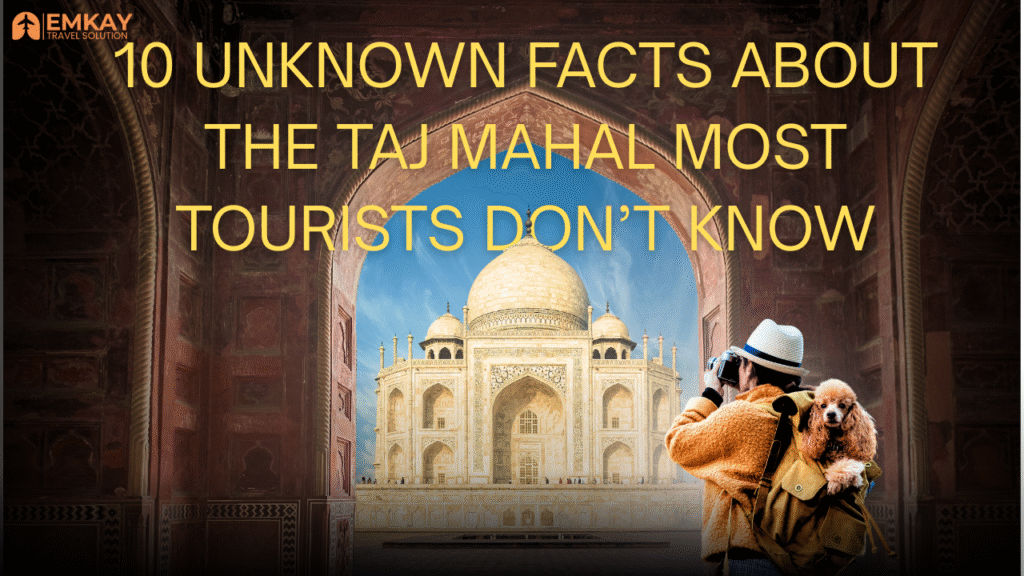
Introduction to the Timeless Wonder – The Taj Mahal
Unknown facts about the Taj Mahal reveal that this iconic monument is far more than a symbol of love—it’s a feeling carved in marble. Standing gracefully on the banks of the Yamuna River in Agra, this timeless masterpiece has fascinated travelers, poets, historians, and dreamers for centuries. Every year, millions of visitors arrive hoping to witness one of the world’s greatest wonders, and almost everyone leaves with the same reaction: silent awe.
Most people are familiar with the legendary love story of Emperor Shah Jahan and his beloved wife Mumtaz Mahal, but that story is only the beginning. Beneath the pristine white marble lie layers of scientific brilliance, architectural mastery, and deep symbolism that many tourists never notice. These hidden details are what transform the Taj Mahal from a beautiful monument into an unforgettable experience
Why the Taj Mahal Is More Than Just a Monument
A Symbol of Eternal Love
At its heart, the Taj Mahal stands as a powerful symbol of eternal love. Built in memory of Mumtaz Mahal, it reflects grief, devotion, and a promise that refused to fade with time. Instead of words or paintings, Shah Jahan chose marble—something meant to last forever.
Among all Taj Mahal facts, this emotional foundation is what connects people across cultures and generations.
A UNESCO World Heritage Marvel
Recognized as a UNESCO World Heritage Site and one of the Seven Wonders of the World, the Taj Mahal represents the highest achievement of Mughal architecture. Its global recognition ensures preservation and continued admiration, making it one of the most visited historical monuments on Earth.
The Architectural Brilliance of the Taj Mahal
A Fusion of Persian, Islamic, and Indian Styles
The Taj Mahal blends Persian domes, Islamic calligraphy, and Indian craftsmanship into a single harmonious design. Every arch, pathway, and garden follows precise geometry, creating balance and peace. This fusion is one of the most admired aspects of Taj Mahal architecture facts.
The Genius Behind Mughal Architecture
Mughal architects believed buildings should tell stories. The Taj Mahal proves architecture can be emotional, scientific, and poetic at the same time—an idea far ahead of its era.
The Taj Mahal Changes Color Throughout the Day
Morning, Afternoon, and Moonlight Magic
One of the most fascinating unknown facts about the Taj Mahal is its color transformation:
- Morning: soft pink hues
- Afternoon: bright white
- Moonlight: gentle golden glow
It feels as though the monument responds to time itself.
Why Does the Taj Mahal Change Color?
This phenomenon occurs due to Makrana marble, which reflects light differently throughout the day. Many historians believe this change symbolized the changing moods of Mumtaz Mahal, making it one of the most poetic Taj Mahal secrets.
The Minarets Are Slightly Tilted (On Purpose)
Earthquake-Resistant Design
Here’s a detail most tourists miss: the four minarets are not perfectly vertical. They lean slightly outward.
Engineering Ahead of Its Time
In the event of an earthquake, these minarets would fall away from the main structure, protecting the tomb. This makes it one of the most impressive hidden facts about the Taj Mahal from an engineering perspective.
More Than 20,000 Workers Built the Taj Mahal
A Global Collaboration
Over 20,000 craftsmen from India, Persia, Turkey, and Central Asia contributed to this monument. It stands as one of history’s earliest examples of international collaboration.
Taj Mahal Construction Facts
Construction took nearly 22 years, from 1632 to 1653. Every detail reflects patience, dedication, and human effort—an aspect often forgotten by tourists.
The Calligraphy That Plays With Your Eyes
Optical Illusions in Stone
The Quranic verses appear uniform, but the lettering grows larger as it rises. This optical illusion ensures perfect visual balance from the ground.
Quranic Verses and Perfect Proportions
This clever technique highlights the deep understanding of perspective and psychology by Mughal designers, adding another layer to interesting facts about the Taj Mahal.
The Mystery of the Black Taj Mahal
Shah Jahan’s Unfinished Dream
Legend suggests Shah Jahan planned a second Taj Mahal made of black marble across the Yamuna River.
Was There Really a Black Taj Mahal?
Though debated by historians, this mystery remains one of the most talked-about Taj Mahal history secrets.
Hidden Underground Chambers of the Taj Mahal
Sealed Rooms and Silent Stories
Beneath the monument lies a series of sealed chambers, closed to the public.
Spiritual and Structural Reasons
Experts believe these chambers were designed for balance and symbolism rather than hidden treasure, adding depth to the unknown facts about the Taj Mahal most tourists don’t know.
The Real Tombs Are Not What You See
Cenotaphs vs Actual Graves
The beautifully decorated tombs visitors see are cenotaphs. The real graves lie in a simple underground chamber.
Islamic Burial Traditions
This reflects Islamic values of humility, contrasting gracefully with the monument’s grandeur.
Precious Stones From Across the World
Pietra Dura Inlay Work
The floral designs are crafted using semi-precious stones, not paint.
Materials Used in the Taj Mahal
- Jade from China
- Turquoise from Tibet
- Lapis lazuli from Afghanistan
- Sapphire from Sri Lanka
- Carnelian from Arabia
These details make the Taj Mahal a truly global masterpiece.
Near-Perfect Symmetry of the Taj Mahal
Balance in Every Direction
Symmetry defines the Taj Mahal—from gardens to domes.
The One Detail That Breaks the Symmetry
Shah Jahan’s tomb, added later, slightly disrupts the balance. This human imperfection adds emotional depth to the structure.
The Taj Mahal and Pollution Threats
Risk of Turning Yellow
Pollution once threatened the marble’s whiteness.
Taj Mahal Preservation Efforts
The Taj Trapezium Zone (TTZ), industry relocation, and traditional cleaning methods like Multani Mitti now protect the monument.
Importance of the Taj Mahal in Indian Tourism
Economic and Cultural Impact
The Taj Mahal supports tourism, employment, and India’s global cultural image.
The Golden Triangle Connection
It remains a key attraction in the Golden Triangle Tour—Delhi, Agra, and Jaipur.
Best Time to Visit the Taj Mahal
Ideal Months and Timings
October to March is ideal, especially early mornings.
Tips for First-Time Visitors
Visit at sunrise or during a full moon night to experience its true magic.
Final Thoughts – A Monument Full of Secrets
The Taj Mahal is more than marble and myths. It is history, science, love, and human emotion frozen in time. When you understand these unknown facts about the Taj Mahal, you don’t just see it—you feel it.
FAQs About the Taj Mahal
1. Why does the Taj Mahal look different during the day?
Because Makrana marble reflects light differently.
2. Are the minarets really tilted?
Yes, slightly outward for structural safety.
3. Is the Black Taj Mahal real?
It remains an unproven historical theory.
4. Can visitors enter the underground chambers?
No, they are sealed.
5. How is the Taj Mahal preserved today?
Through pollution control zones and traditional cleaning methods.
Follow Us Now : Facebook, Instagram
You May Also Like : Taj Mahal Tour by Gatimaan Express, Best travel Agency in Agra, Taj Mahal Sunrise Tour from Delhi by Car


