
Introduction
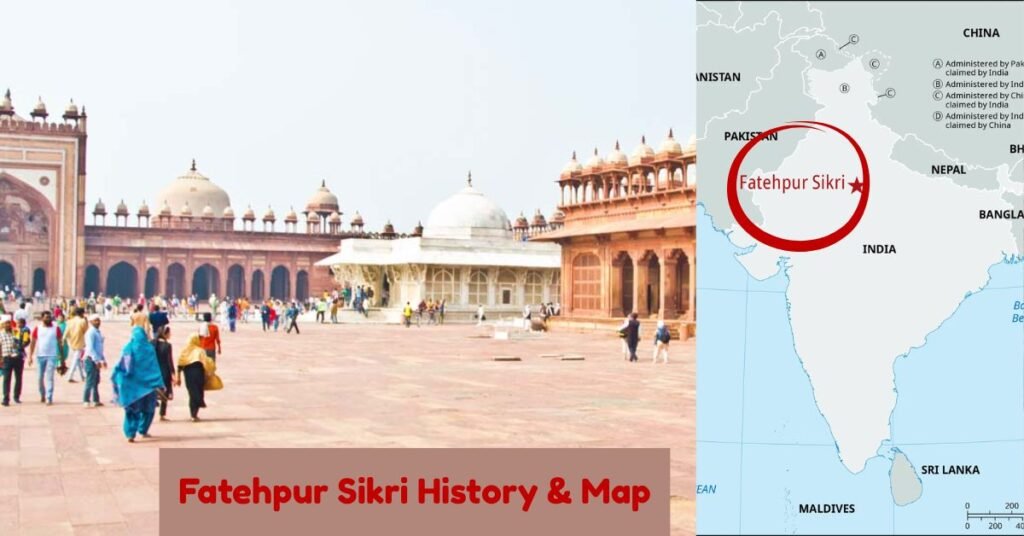
Nestled just 36 kilometers west of Agra, Fatehpur Sikri is an enduring testament to the grandeur of the Mughal Empire. Founded in the late 16th century by Emperor Akbar, this magnificent city once served as the empire’s capital before being mysteriously abandoned. Today, it stands as a vibrant archaeological and architectural marvel, drawing visitors from across the globe.
This article delves deeply into the fascinating history of Fatehpur Sikri, offers a detailed insight into its architectural gems, and provides a comprehensive map-based guide to navigating this sprawling heritage city. Whether you are a history enthusiast, an architecture lover, or a curious traveler planning your 2025 visit, this guide will serve as your trusted companion.
The Rich History of Fatehpur Sikri
Origins and Foundation
The story of Fatehpur Sikri begins long before the Mughal emperor laid its foundations. Archaeological evidence traces human settlement in the area back to the Painted Grey Ware period (circa 1200 BCE). Over centuries, it evolved under various rulers, including the Rajputs and the Delhi Sultanate, each leaving their mark.
The city gained monumental importance during Emperor Akbar’s reign (1556-1605). Akbar founded Fatehpur Sikri in 1571 as his new capital, inspired especially by his spiritual association with the revered Sufi saint Sheikh Salim Chishti. The saint’s prophecy regarding the birth of Akbar’s heir influenced the emperor to shift his throne here.
Political and Cultural Significance
Fatehpur Sikri embodies Akbar’s vision of a harmonious empire blending diverse cultures—Hindu, Muslim, Jain, and Christian—under one umbrella. The city design reflects this, with palatial quarters dedicated to his queens of different faiths and vast public spaces emphasizing royal power and accessibility.
The city actively thrived from 1571 till about 1585, when due to water shortages and strategic considerations, Akbar shifted his court to Lahore. Nevertheless, Fatehpur Sikri continued to have historical and symbolic relevance throughout the Mughal era and beyond.
Architectural Highlights
Fatehpur Sikri is a masterpiece of Mughal architecture, notable for its uniform red sandstone construction and its unique blend of Islamic, Persian, Indian, and even Christian elements.
Key Architectural Features of Fatehpur Sikri
| Monument | Description | Unique Feature |
|---|---|---|
| Buland Darwaza | The towering “Gate of Victory,” built to commemorate Akbar’s victory over Gujarat | World’s highest gateway (54 meters) |
| Jama Masjid | One of India’s largest mosques with intricate carvings | Marble-filled mihrab, raised platform |
| Panch Mahal | Five-storied palace used for royal entertainment | Open and airy design with ornate pillars |
| Diwan-i-Khas | Emperor’s private audience hall with iconic central pillar | Central locus for imperial discussions |
| Tomb of Salim Chishti | Sacred site of the Sufi saint who predicted Akbar’s heir | Below ground, white marble shrine |
| Jodha Bai Palace | Residence of Akbar’s Hindu wife, blending Rajput and Mughal styles | Distinct Hindu architectural influence |
These structures speak volumes of cultural syncretism and Akbar’s artistic patronage.
Exploring Fatehpur Sikri: The Map and Layout
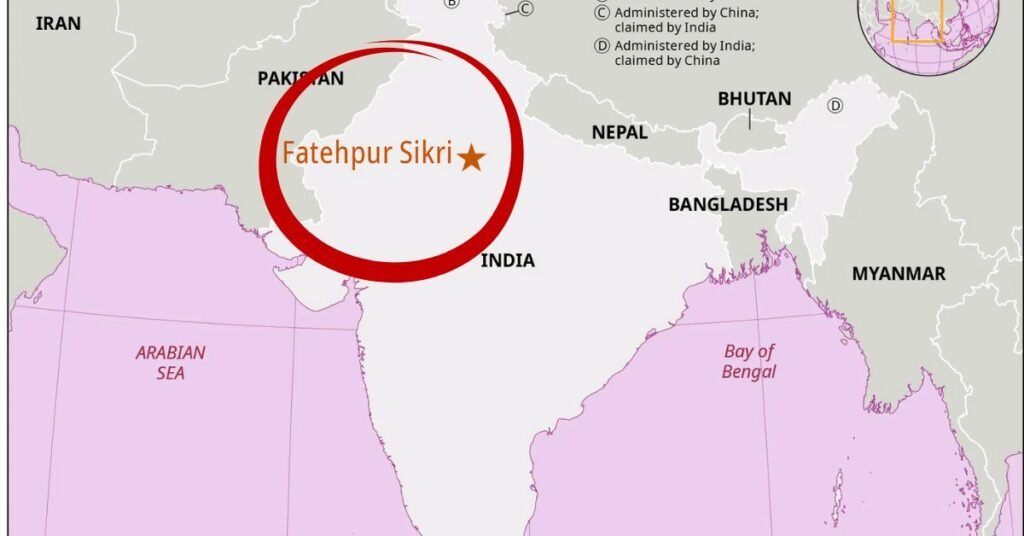
Sprawled over an estimated area of 10 square kilometers, Fatehpur Sikri is a walled city marked by gates radiating from the central royal complexes. Visiting the city without a map can be an overwhelming experience, considering the number of monuments, courtyards, and hidden nooks.
Fatehpur Sikri Complex – Key Zones and Attractions
| Area | Main Attractions | Distance from Entrance (Approx.) |
|---|---|---|
| Eastern Gate | Buland Darwaza, Jama Masjid | 0-500 meters |
| Royal Palace Complex | Diwan-i-Khas, Panch Mahal, Halls | 500-1500 meters |
| Religious Complex | Tomb of Salim Chishti | 1500-1900 meters |
| Residential Quarters | Jodha Bai’s Palace, servant quarters | 1900-2500 meters |
| Outer City Walls | Various secondary gates and ramparts | Entire perimeter |
Tips to Navigate: The site has clear pathways and signposts, but carrying a printed or digital map enhances the experience and prevents missing lesser-known features.
Visiting Practicalities: Timings, Entry Fee & Tourism Facilities
Timings & Entry of Fatehpur Sikri
| Season | Open Hours | Notes |
|---|---|---|
| Winter | 6:30 AM – 5:30 PM | Cooler months, ideal visiting time |
| Summer | 6:00 AM – 6:30 PM | Hotter season, morning visits recommended |
| Open Days | Every day of the week | Minimal exceptions for maintenance |
Entry Fee (2025) Of Fatehpur Sikri
| Visitor Category | Ticket Price (INR) |
|---|---|
| Indian Citizens | ₹50 |
| Foreign Tourists | ₹550 |
| Children under 15 | Free |
| Photography permit | Additional fee applies |
Tourist Facilities in Fatehpur Sikri
| Facility | Description |
|---|---|
| Guided Tours | Available in multiple languages, recommended |
| Restrooms | Available at strategic points on site |
| Food & Drink | Small cafes and local vendors near entrances |
| Parking | Separate parking areas for cars and buses |
| Accessibility | Limited due to terrain; wheelchair recommendations suggested |
Nearby Attractions & Suggested Itinerary
While visiting Fatehpur Sikri, it’s a great idea to explore related nearby sites:
- Agra Fort: Just 40 km east and another World Heritage site
- Taj Mahal: Around the same distance for a comprehensive Mughal heritage day
- Local Sikri Village: Experience rural life and crafts around Fatehpur Sikri
Suggested itinerary:
| Time | Activity |
|---|---|
| 8:00 AM | Arrive and purchase tickets |
| 8:15 AM-11:30 AM | Guided tour of key monuments and attractions |
| 11:30 AM-12:00 PM | Visit the village market & souvenir shops |
| 12:00 PM | Return to Agra or lunch nearby |
Summary
Fatehpur Sikri is a once-in-a-lifetime journey into India’s Mughal golden age. It offers architectural brilliance and a window into political and spiritual history with its preserved monuments and city layout. Whether you’re exploring the lofty Buland Darwaza or the serene Tomb of Salim Chishti, the city narrates a tale of power, faith, and artistry.
FAQs: Fatehpur Sikri History & Map 2025
Q1: When was Fatehpur Sikri founded?
A1: It was founded by Emperor Akbar in 1571 as the Mughal capital.
Q2: Why was Fatehpur Sikri abandoned?
A2: Mainly due to water shortages and political-military reasons, Akbar shifted his capital in 1585.
Q3: Is Fatehpur Sikri open every day?
A3: Yes, it is generally open daily throughout the year during daylight hours.
Q4: How much is the entry ticket?
A4: Indian nationals pay ₹50, foreign tourists ₹550, and children under 15 enter free.
Q5: Can visitors explore the entire city?
A5: Most of the architectural and key monuments are accessible though some areas may have restricted access for preservation.
Q6: Is there a map available?
A6: Yes, free maps are available at the entrance and online, which help in efficient exploration.
Conclusion
Fatehpur Sikri is a crown jewel of Mughal India that, even in its deserted grandeur, continues to inspire awe and reverence. The expertly planned city combines art, politics, and spirituality into spaces that survive centuries of change. Your 2025 visit to Fatehpur Sikri will be enriched by understanding its history, roaming its mapped routes, and absorbing the vibe of an empire frozen in time.
Follow Us Now : Facebook, Instagram
You May Also Like : Taj Mahal Tour by Gatimaan Express, Best travel Agency in Agra, Taj Mahal Sunrise Tour from Delhi by Car


