
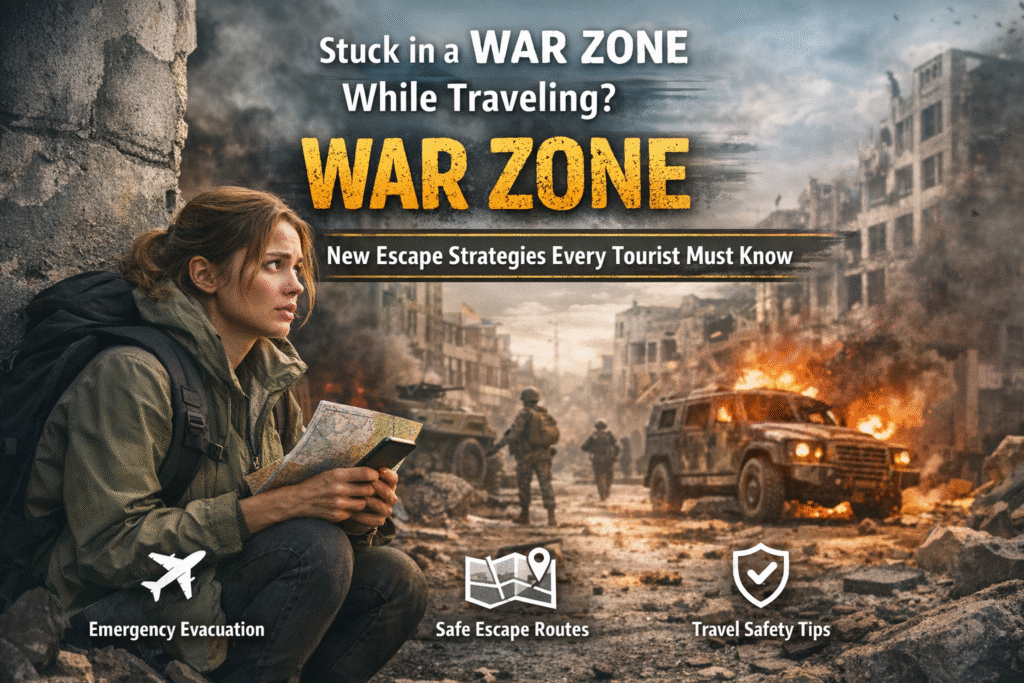
Stuck in a War Zone While Traveling is one of the most dangerous situations any tourist can face. Traveling to a new country is exciting, but unexpected conflicts, military attacks, or political unrest can quickly turn a normal trip into a life-threatening situation. Many travelers around the world have experienced being stuck in a war zone while traveling, especially in regions where sudden conflicts break out.
If you ever find yourself stuck in a war zone while traveling, knowing the right escape strategies, safety tips, and evacuation plans can make the difference between danger and survival. In this guide, you will learn practical travel safety strategies every tourist should know during emergencies.
Why Tourists Can Get Stuck in War Zones
Even the most peaceful destinations can suddenly become unsafe. Political instability, military conflicts, terrorist attacks, or sudden invasions can escalate quickly.
For example, tourists have been stranded during conflicts in countries like Ukraine, Israel, and Sudan. Flights were cancelled, borders closed, and transportation systems stopped working.
This is why tourist safety during war has become an important topic in modern travel planning.
Common reasons tourists get stuck include:
- Sudden military conflict
- Government lockdowns
- Border closures
- Airport shutdowns
- Communication disruptions
Understanding these risks before traveling can help you prepare for emergencies.
Early Warning Signs of Conflict While Traveling
Before a war officially begins, there are often warning signs. Tourists who pay attention to these signals can escape early and avoid dangerous situations.
Some common warning signs include:
Political Tension
If protests, riots, or political instability are increasing in the country you are visiting, it may indicate possible conflict.
Military Movement
Seeing military vehicles, checkpoints, or soldiers deployed in large numbers could signal rising tension.
Government Alerts
Many governments issue travel advisories when a destination becomes unsafe. Always check your country’s travel advisory website before traveling.
News Reports
International news often reports about growing tensions between countries or internal conflicts.
If you notice these warning signs, it is wise to leave the area immediately.
Step 1: Stay Calm and Assess the Situation
If you suddenly find yourself stuck in a war zone while traveling, the first rule is simple:
Do not panic.
Panic leads to poor decisions. Instead, focus on gathering information and assessing your surroundings.
Ask yourself these questions:
- Is the conflict happening nearby or far away?
- Are airports or train stations still operating?
- Is the internet still working?
- Are local authorities giving instructions?
Use reliable news sources and official government channels to understand what is happening.
Step 2: Contact Your Embassy Immediately
One of the most important war zone survival tips for tourists is contacting your embassy.
Embassies help citizens during emergencies by:
- Providing evacuation information
- Offering emergency shelters
- Arranging rescue flights
- Giving travel instructions
Register with your embassy’s emergency system if possible.
Many governments run programs like travel registration services, which allow them to contact you during crises.
Step 3: Find Safe Shelter
If evacuation is not immediately possible, finding a safe location is critical.
Avoid:
- Military bases
- Government buildings
- Police stations
- Large public protests
These locations may become targets during conflicts.
Safer places include:
- Large hotels
- Underground parking structures
- Basements
- Secure residential buildings
Staying indoors can significantly reduce the risk of injury during active conflict.
Step 4: Avoid Crowds and Dangerous Areas
During war or civil conflict, large crowds can quickly become chaotic and dangerous.
Tourists should avoid:
- Protests
- Military checkpoints
- Crowded transportation hubs
- Conflict zones
Instead, stay in low-profile areas where fewer people gather.
Blending in with locals and keeping a low profile can help reduce attention.
Step 5: Keep Emergency Supplies Ready
If you are stuck in a conflict area, having essential supplies can make a huge difference.
Important emergency items include:
- Drinking water
- Non-perishable food
- Power banks
- First aid kit
- Flashlight
- Copies of important documents
Also keep some local cash, because ATMs and digital payments may stop working during emergencies.
Step 6: Plan Multiple Escape Routes
One mistake many tourists make is relying on only one evacuation plan.
Instead, identify multiple escape routes, such as:
- Airports
- Land borders
- Train stations
- Sea ports
Sometimes airports close first, but land borders remain open.
Planning multiple options increases your chances of escaping safely.
Step 7: Use Technology to Stay Informed
Modern technology can help travelers survive dangerous situations.
Useful tools include:
- GPS navigation apps
- Emergency alert apps
- Satellite communication devices
- Offline maps
Even if internet access becomes unstable, offline maps can help you navigate safe routes.
Step 8: Follow Local Authorities
Local authorities often provide evacuation instructions during emergencies.
Pay attention to:
- Government announcements
- Police instructions
- Emergency broadcasts
Ignoring official instructions could put you in greater danger.
Step 9: Travel with a Low Profile
When escaping a conflict zone, the best strategy is often to avoid attention.
Avoid wearing:
- Expensive jewelry
- Flashy clothing
- Tourist identification
Instead, dress simply and blend in with the local population.
This reduces the chances of becoming a target.
Step 10: Stay Connected With Family
During emergencies, communication is extremely important.
Keep family and friends updated about your location and safety.
Use messaging apps, emails, or emergency communication services to inform them about your situation.
If communication networks fail, try to reach areas where signals are stronger.
Best Travel Safety Tips to Avoid War Zones
The best survival strategy is avoiding dangerous situations before they happen.
Before traveling internationally, follow these safety tips:
- Check government travel advisories
- Monitor international news
- Register with your embassy
- Avoid politically unstable regions
- Keep digital copies of documents
These precautions can significantly reduce travel risks.
The Importance of Emergency Travel Insurance
Many travelers overlook travel insurance, but it can be extremely valuable during crises.
Emergency travel insurance can help with:
- Emergency evacuation
- Medical assistance
- Flight cancellations
- Accommodation during delays
In high-risk regions, insurance can become a lifesaver.
Final Thoughts
Being stuck in a war zone while traveling is one of the most frightening situations a tourist can face. However, proper preparation and quick thinking can dramatically improve your chances of staying safe.
By staying informed, contacting your embassy, avoiding dangerous areas, and planning escape routes, travelers can navigate even the most difficult situations.
Travel is one of life’s greatest experiences, but safety should always come first.
FAQ (Frequently Asked Questions)
What should tourists do if war breaks out while traveling?
Tourists should stay calm, contact their embassy immediately, avoid conflict areas, find safe shelter, and follow official evacuation instructions.
Can embassies evacuate tourists from war zones?
Yes. Many embassies organize evacuation flights or provide guidance for citizens during conflicts. However, evacuation may depend on the situation and available transportation.
Is travel insurance useful during war situations?
Yes. Some travel insurance plans cover emergency evacuations, medical support, and travel disruptions caused by conflicts.
How can travelers avoid getting stuck in war zones?
Travelers should check government travel advisories, monitor international news, avoid politically unstable regions, and register with their embassy before traveling.
What emergency supplies should tourists carry?
Essential emergency supplies include water, food, power banks, a first aid kit, copies of important documents, and some local cash.
Follow Us Now: Facebook | Instagram
You May Also Like:
Same Day Agra Tour from Delhi | Private Taj Mahal Tour | Agra City Tour Package | Taj Mahal Sunrise Tour | Half-Day Delhi Sightseeing Tour | Golden Triangle Tour India


